
Disclaimer: Some links are Amazon affiliate links. Purchases made through them help support the recipe testing, photos, and content I share — thank you!
Summary
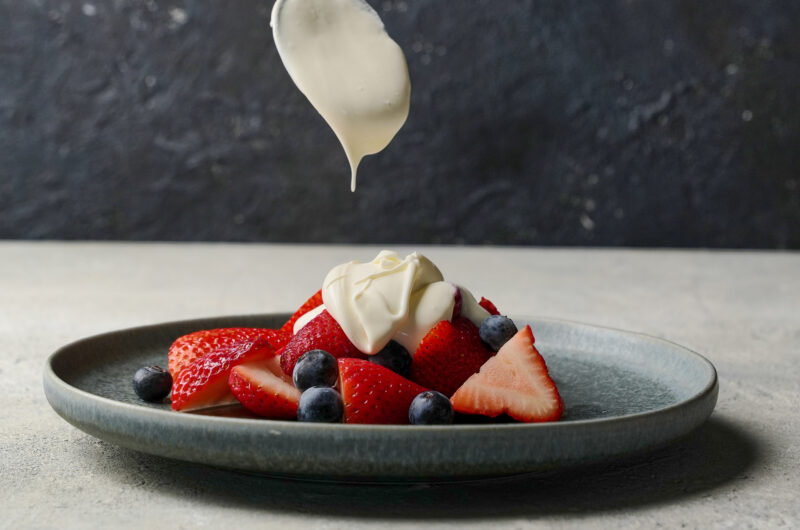
Luxurious Crème fraîche that takes just 60 seconds of your time to make.
Fresh cream, aka Crème fraîche, is ridiculously easy to make and is much cheaper when home made vs store bought. It lasts a long time in the fridge and is perfect for creamy sauces, toppings, finishing off scrambled eggs. Once you realize how quick and easy it is, you wont ever buy store bought again.
8
servings1
minute0
minutes110
kcal18
hours18
hoursFresh cream, aka Crème fraîche, is ridiculously easy to make and is much cheaper when home made vs store bought. It lasts a long time in the fridge and is perfect for creamy sauces, toppings, finishing off scrambled eggs.
Ingredients
240 g 1 cup heavy cream
15 g 1 tbsp Cultured Butter Milk
Directions
Before We Start
Using Yogurt: If using yogurt, you can speed up the process by doubling the amount from 1 tbsp (15g) to 2 tbsp (30g) for every 8 oz (240g) of heavy whipping cream. Most store-bought yogurts tend to have less cultures than buttermilk, so it takes more than twice as long to make (40–60 hrs). By doubling it, the Crème fraîche is ready in more like 18–24 hrs.
Buttermilk: If using buttermilk, you need buttermilk that has live cultures in it. Normally it will just say cultured buttermilk on the label. Otherwise, look for a list of active or live cultures on the ingredients list.
Adjusting Thickness & Tanginess: The longer it sits out, the more it thickens and the tangier it gets. We found that 18–24 hrs produced the best texture. At 12 hrs you technically have Crème fraîche, but it will be thinner than store-bought versions.
Speeding Up the Process: You can warm it to 78–82°F using a fermentation chamber or seedling mat. This speeds up culturing. If using this method, check it after 18 hrs. 20–22 hrs is often ideal. Adding more cultures also speeds things up.
Using Seedling Mat: A seedling mat from Amazon can raise ferment temps by 10–15°F. Use a thermometer after 8 hrs to check. If it’s above 85°F, use a trivet or hot pad to buffer heat. Ideal temp is 82°F. You can also build a fermentation chamber for precision.Combine Ingredients
In a medium bowl or container, combine about ¼ of the cream with the buttermilk or yogurt. Whisk to eliminate lumps and distribute cultures. Add remaining cream and whisk again. Transfer to an airtight glass or plastic container and place the lid on.
Note: We mix everything in the container we’re storing it in to save on dishes.Let it ferment
If not using special equipment: Leave on the counter at room temp for 18–36 hrs. Check after 20 hrs; 24–30 hrs is usually ideal if using buttermilk or doubled yogurt.
If using a seedling mat: Follow our “Before We Start” section. Aim for 80–85°F or 82°F in a chamber. Check after 18 hrs, with 20–22 hrs often ideal.
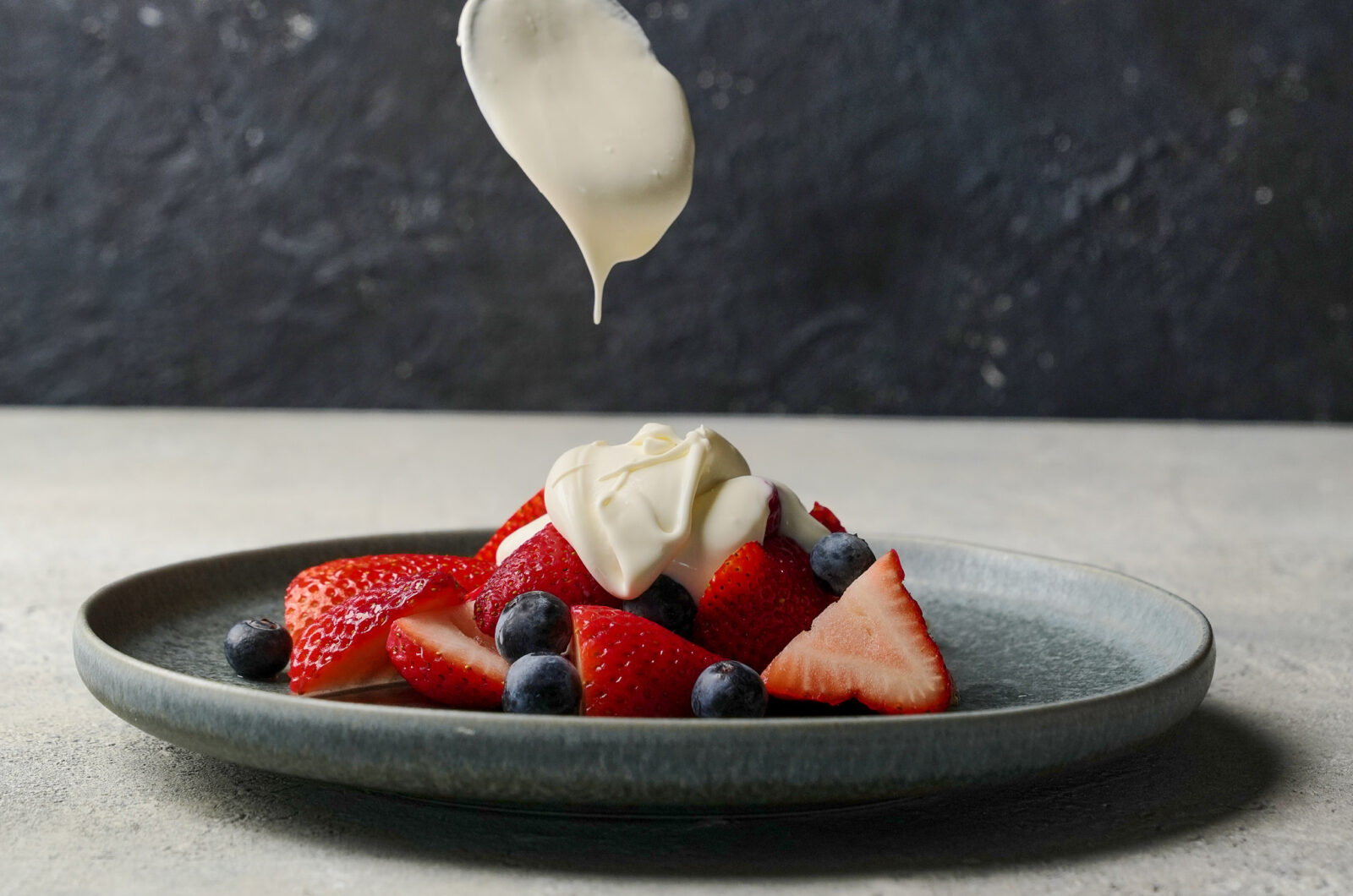
You’re looking for: A cream thick enough to hold shape when spooned. If it collapses, it needs more time. It thickens more once chilled.
To increase tanginess: Let it sit longer.
Note: There’s a 2–3 hr window before noticeable thickening starts, so timing doesn’t need to be exact.Refrigerate
Once it thickens and tastes how you like, refrigerate it. If liquid (whey) collects, spoon it off or leave it—it’s fine either way. It will continue to thicken slightly in the fridge.
You May Like These Recipes Too
Additional Details About This Recipe
How long will homemade Crème fraîche last?
Most Crème fraîche labels will say to use within 14 days after opening. However, homemade Crème fraîche will can last longer than that.
It’s better to know the signs of spoilage to look out for instead of going by arbitrary dates set by manufacturers. Those signs are mold, discoloration, foul oder, and curdling. Creme fraiche can last over a month if stored properly. Because it’s a cultured dairy product, it’s fairly stable—but always trust your nose and eyes. If it smells sour in a bad way (more than usual), gets slimy, or develops mold, toss it.
Is Crème fraîche worth making from scratch?
Yes. Making Crème fraîche is well worth it because it is cheaper, lasts longer, and is extremely easy to make. With less than 5 mins of active time, it can be made on the regular for even the busiest of people. You can also avoid micro plastics by using glass containers to make and store it.
How to can I make Crème fraîche faster?
There are two steps you can take.
Warm it up: Creating an environment where the cultures can thrive speeds up the fermentation process. That ideal range for the cream is 80-85 degrees. You can use a fermentation chamber or seedling mat to elevate the temperature enough to achieve this range.
Use more cultures to start: Doubling the amount of buttermilk or yogurt can speed up the process. You effectively double the amount of cultures you start with. If going this route, we recommend checking it after 16-18 hrs.
What is Crème fraîche?
Crème fraîche is a thick, cultured cream with a rich, slightly tangy flavor, similar to sour cream but milder and creamier. It has a high fat content, which allows it to be heated without curdling, making it ideal for both savory and sweet dishes. Commonly used in French cooking, crème fraîche can be stirred into soups and sauces, spooned over desserts or fruit, or used as a base for dips and dressings. Its smooth texture and subtle acidity add depth to recipes, and it’s easy to make at home by combining heavy cream with a small amount of buttermilk or another culture and letting it sit at room temperature until thickened.
What can Crème fraîche be used for?
Crème fraîche can be used in a wide range of dishes, both savory and sweet. It adds richness to soups, stews, and sauces without curdling, making it perfect for finishing hot dishes like creamy pastas or pan sauces. It also works well as a topping for baked potatoes, roasted vegetables, or grilled meats. On the sweeter side, it’s delicious dolloped over fresh fruit, pies, pancakes, or cakes, and can be lightly sweetened for desserts. Additionally, it makes a great base for dips, dressings, and spreads, offering a smooth texture and subtle tang that enhances flavor.
Is there a difference when using yogurt vs buttermilk to make Crème fraîche?
The texture and taste will be the same regardless of which one you choose. The difference is in the time it takes to make the Crème fraîche. In addition, using Yogurt may accumulate some liquid (whey) in the process that can be spooned out or left in.
Nutritional Facts
Estimated per 2-tbsp serving (based on 8 servings per batch):
- 110 calories
- 1g protein
- 12g total fat
- 7g saturated fat
- 1g carbohydrates
- 0g dietary fiber
- 0g total sugars
- 5mg sodium
- 30mg calcium
- 0mg iron
- 25mg potassium