
Disclaimer: Some links are Amazon affiliate links. Purchases made through them help support the recipe testing, photos, and content I share — thank you!
Summary
A tangy twist on tomatoes that packs a probiotic punch.
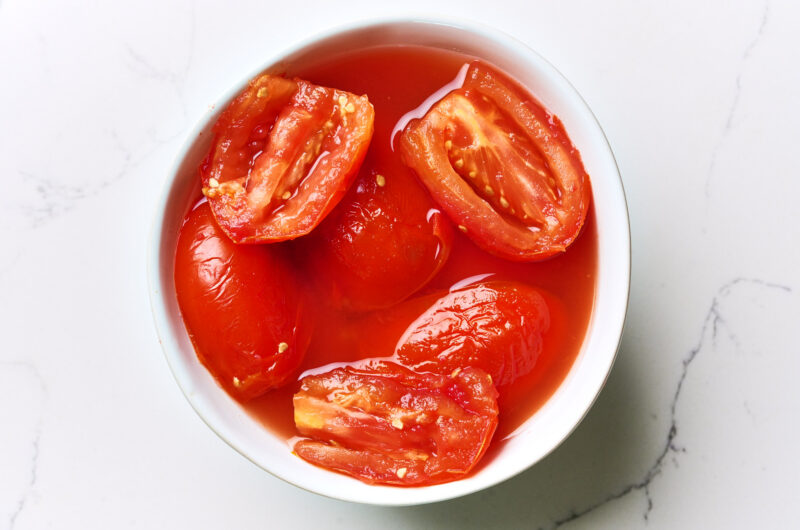
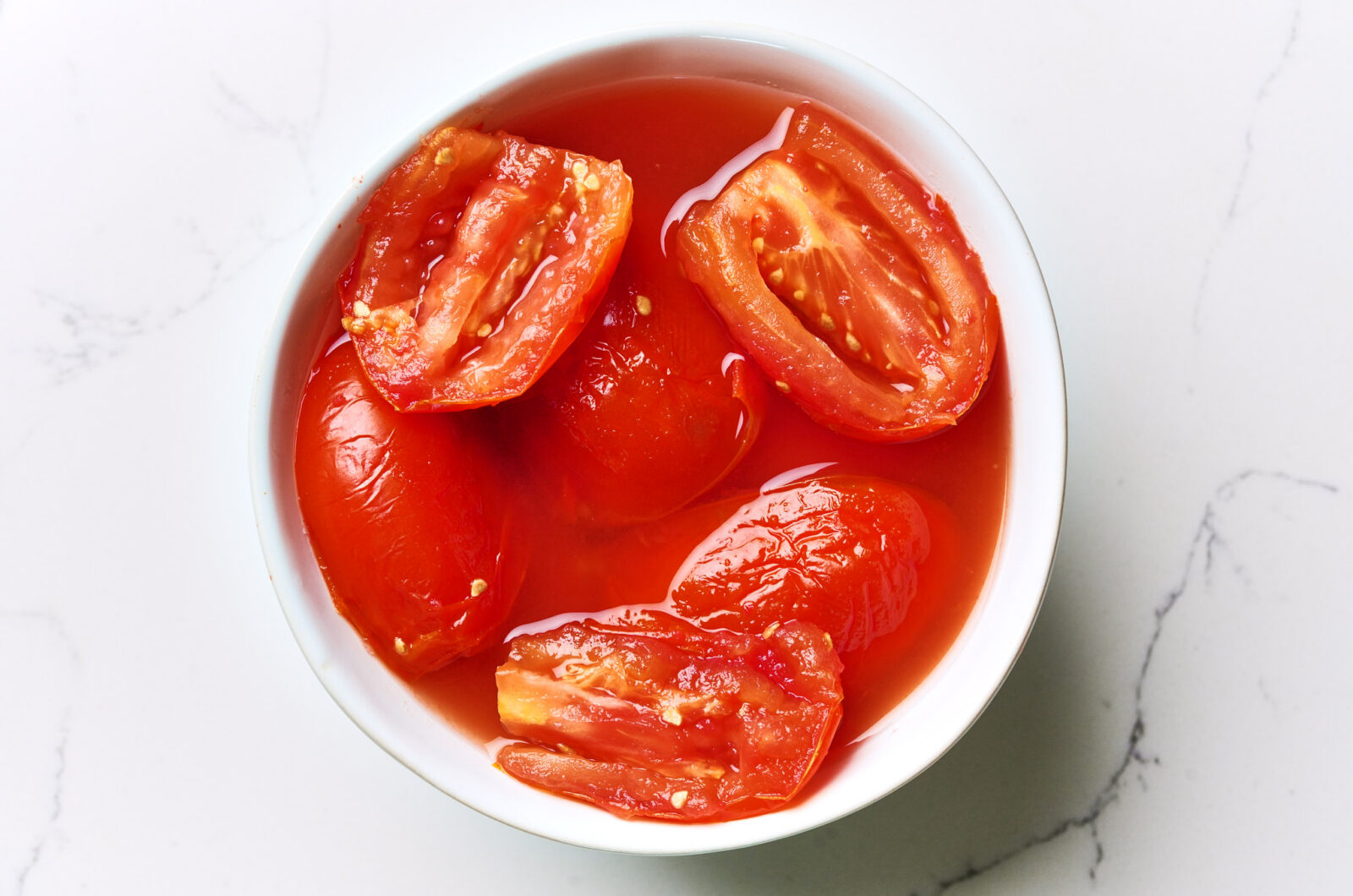
Lacto-fermented tomatoes are one of the simplest ways to transform an everyday ingredient into something extraordinary. With just two ingredients and a few days of patience, you’ll have a tangy, deeply savory condiment loaded with gut-friendly probiotics. The natural lactic acid fermentation brightens the acidity while adding subtle complex umami flavor. My favorite part, it softens them and gets rid of the raw tomato taste, so it has cooked tomato qualities while still being raw.
6
10
minutes18
kcal72
hours72
hours10
minutesA tangy twist on tomatoes that packs a probiotic punch.
Ingredients
600 g 6 roma tomatoes, halved
12 g 2 tsp kosher salt
Directions
Before We Start
Choosing Tomatoes: Use ripe but firm roma (plum) tomatoes for the best results. Their meaty flesh and low moisture content hold up well during fermentation. Avoid overripe or bruised tomatoes — they can turn mushy and introduce off-flavors.
Salt Ratio: The 2% salt-by-weight ratio is the sweet spot for safe, consistent lacto-fermentation. It’s high enough to suppress harmful bacteria while allowing beneficial Lactobacillus to thrive. Always weigh your salt — volume measurements are unreliable since salt crystal sizes vary.
Salt Type: Use kosher salt without iodine or anti-caking agents. Both additives can interfere with fermentation.
Fermentation Environment: A warm, consistent spot on your counter works well. We use a DIY fermentation chamber to get consistent temperature and timing. Aim for 72–82°F (22–28°C). Higher temperatures will speed up fermentation; lower temperatures will slow it down. Avoid direct sunlight.Prep the Tomatoes
Cut the roma tomatoes in half lengthwise. Trim away any stems, core the tough stem end with a knife, and remove any blemishes.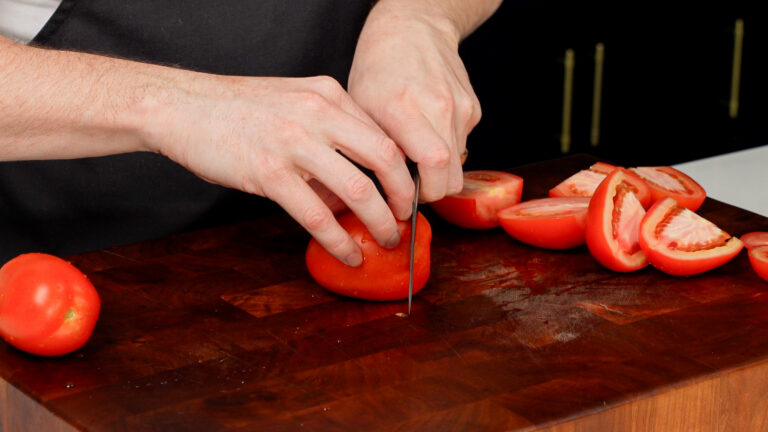
Salt the Tomatoes
Weigh the prepped tomatoes and calculate 2% of that weight in salt. Add the tomatoes and salt to a large bowl and toss thoroughly.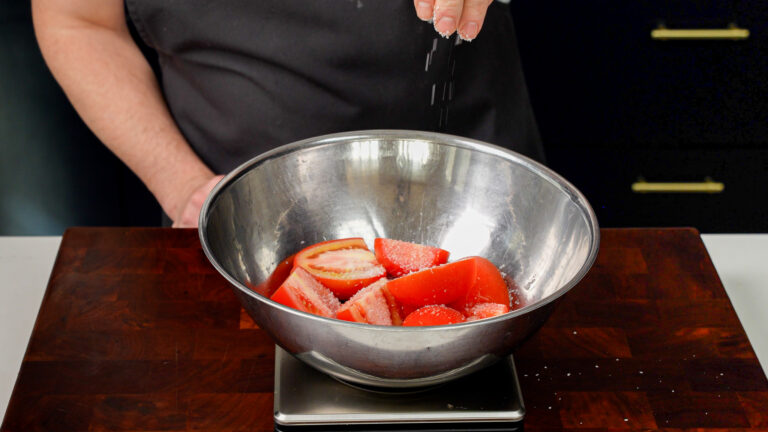
Pack and Seal
Transfer the salted tomatoes into a vacuum seal bag. Use a vacuum sealer to remove air and seal the bag tightly.
No vacuum sealer? No problem!
If you don’t have a vacuum sealer, you can add your tomatoes to a gallon sized ziplock bag. Then fill a sink with some water and carefully place the bag into the water to submerge it while keeping the entire seal just above the water line. Seal the bag while the pressure from the water is forcing the air out of the bag. This technique also works when you want to sous vide food without having an actual vacuum sealer.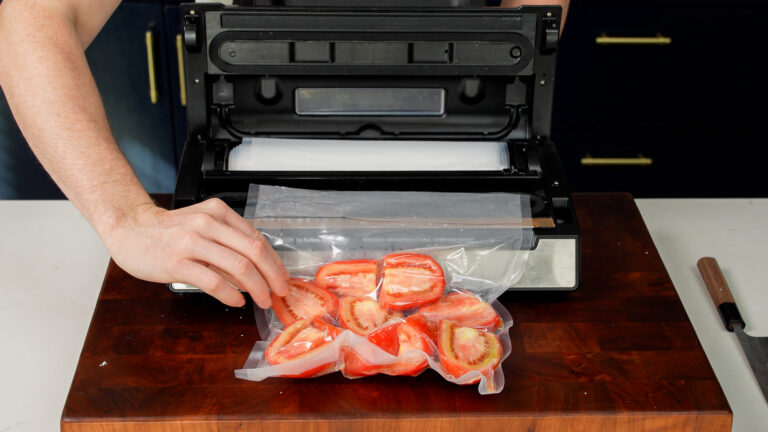
Ferment
Place the sealed bag in your fermentation chamber (Set to 82F) or leave in a warm place in your home for 3–5 days. The bag will puff up some with CO₂ — this is normal and a sign of active fermentation.
Results at 3 Days: Slightly sour, mild fermentation.
Results at 4 Days: Noticeably more sour, slightly softer. (our favorite for the fermentation chamber method at 82F)
Results at 5 Days: Sour with umami characteristics, lightly cooked texture (recommended when not using a fermentation chamber ~72F)
Results at 6+ Days: Very sour. Generally not recommended unless using for a specific use case.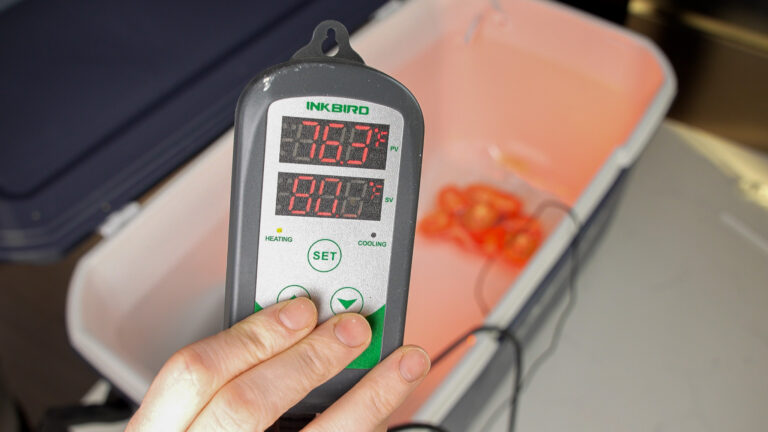
Taste and Adjust
If this is your first time fermenting, it is best to start tasting it each day beginning on day 3. Open the bag and taste. Seal it back up and continue fermenting if you want to let it sour more. Repeat each day until you reach your desired level of fermentation.Store
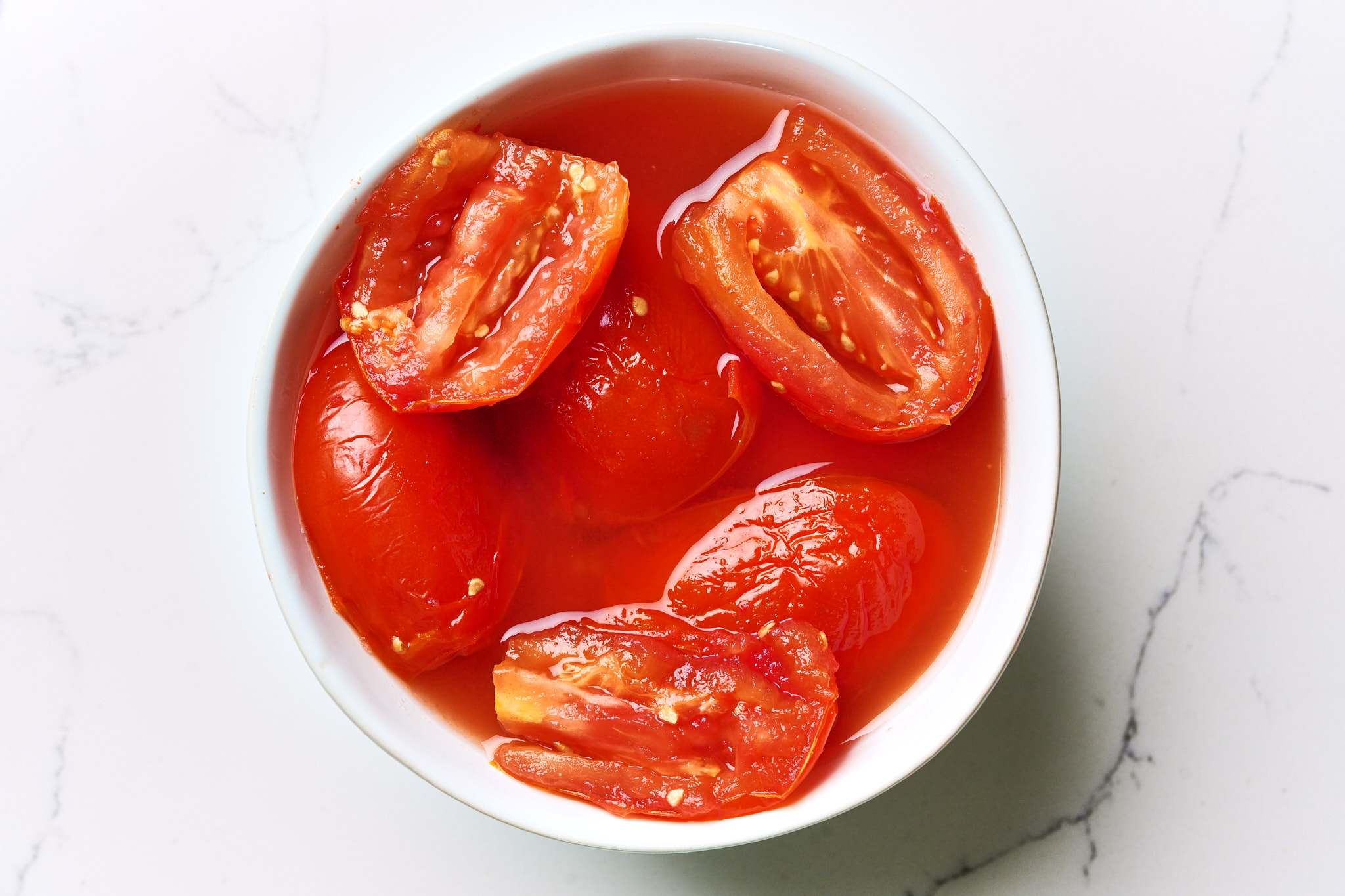
Once fermented to your liking, transfer the tomatoes and their brine to a clean, airtight container and refrigerate. The cold temperature will dramatically slow fermentation.
Keeps for 3–4 weeks refrigerated.
Save the brine. You can use it to pickle vegetables, add complexity to sauces and make a tomato vinaigrette.
You May Like These Recipes Too
Additional Details About This Recipe
Can I use different tomatoes?
Yes, but choose firm, meaty varieties. Roma are ideal. Cherry tomatoes work well too. High-moisture varieties like beefsteak will ferment faster and produce a softer result.
What if I don’t have a vacuum sealer?
Use a ziplock bag and submerge in water (leave the seal above the water line) to force the air out. Then seal it. This is a way to get the air out of the bag.
How do I know if it’s fermenting properly?
Look for small bubbles rising through the brine, a slightly cloudy liquid, and a tangy, pleasantly sour aroma. These are signs of healthy lactic acid fermentation. A thin white film (kahm yeast) on the surface is harmless but should be skimmed off. If you see fuzzy, colored mold (pink, black, green), discard the batch.
Can I add spices or herbs?
Absolutely. Smashed garlic cloves, fresh basil, dried oregano, red chili flakes, black peppercorns, or a bay leaf all add complexity to it. Start conservatively — fermentation amplifies flavors.
How do I use fermented tomatoes?
You can use them in place of raw tomatoes on sandwiches, chop them into salads or grain bowls, blend them into pasta sauces or vinaigrettes, pile them on toast with ricotta, use them as a pizza topping, or serve them alongside grilled meats and roasted vegetables. The leftover brine is excellent in Bloody Marys or as a marinade base.
Nutritional Facts (per ~100 g serving)
(Values are estimates based on USDA data for roma tomatoes and salt. Fermentation may slightly reduce sugar content as bacteria convert it to lactic acid.)
- Calories: 18 kcal
- Protein: 0.9 g
- Fat: 0.2 g
- Carbohydrates: 3.9 g
- Fiber: 1.2 g
- Sodium: ~390 mg