
Disclaimer: Some links are Amazon affiliate links. Purchases made through them help support the recipe testing, photos, and content I share — thank you!
Summary
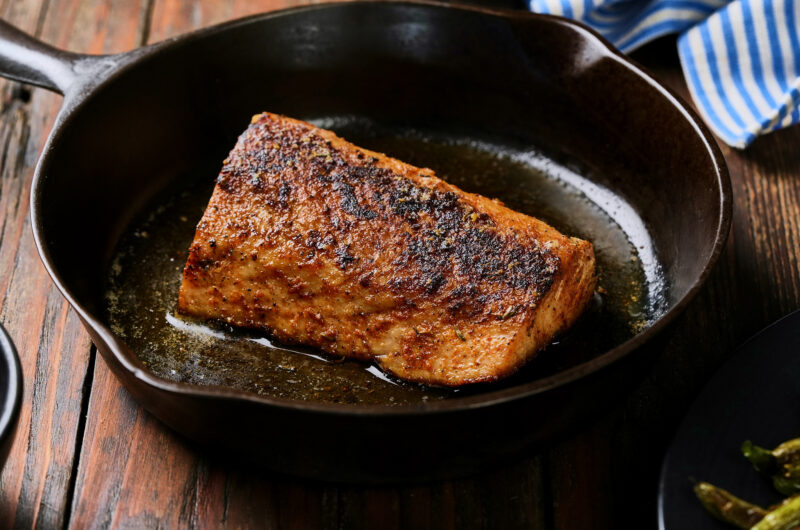
This is a master class in perfecting blackened fish.
This blackened mahi mahi recipe is a quick and flavorful way to enjoy seafood and the same techniques work for snapper, grouper, halibut, and tilapia as well. The smoky, spiced crust pairs beautifully with the tender, flaky fish. With a balance of heat and richness, it’s ideal for a healthy, satisfying meal that’s ready in no time. A lot of people get blackening wrong, but once you know the secrets we go over in this recipe, you will become a pro at it and deliver great results every time.
2
filets10
minutes10
minutes320
kcal20
minutesThis blackened mahi mahi recipe is a quick and flavorful way to enjoy seafood and the same techniques work for snapper, grouper, halibut, and tilapia as well.
Ingredients
438 g 2 fillets mahi mahi
31 g 2 tbsp + 1/2 tsp avocado oil, divided (see notes)
3.75 g 3/4 tsp salt
1 g 1/2 tsp black pepper, medium grind
7 g 1 tbsp paprika
5 g 1/2 tbsp garlic granules
3 g 1 tsp onion granules
0.4 g 1/2 tsp dried thyme
0.2 g 1/2 tsp dried oregano
0.5 g 1/4 tsp cayenne pepper (adjust to taste)
42 g 3 tbsp unsalted butter
Equipment
Directions
Before We Start
Fish Selection: Look for fresh mahi mahi fillets with firm, translucent flesh. Frozen fillets work too—just thaw them completely in room temperature or cold water while still in its vacuum sealed bag. This recipe also works with other firm white fish like snapper, grouper, halibut, and tilapia.
Blackening Seasoning: This recipe uses our blackened seasoning blend; we have listed the ingredients and measurements in the steps below. If using a store-bought one, you will need to adjust the salt and pepper since ours intentionally omits these.
Avocado Oil Alternatives: We like avocado oil since it is a less processed, neutral oil with a high smoke point. You can use another oil such as canola, vegetable, or peanut oil if you don’t have it. Avoid low smoke point or flavored oils.Make the Blackened Seasoning
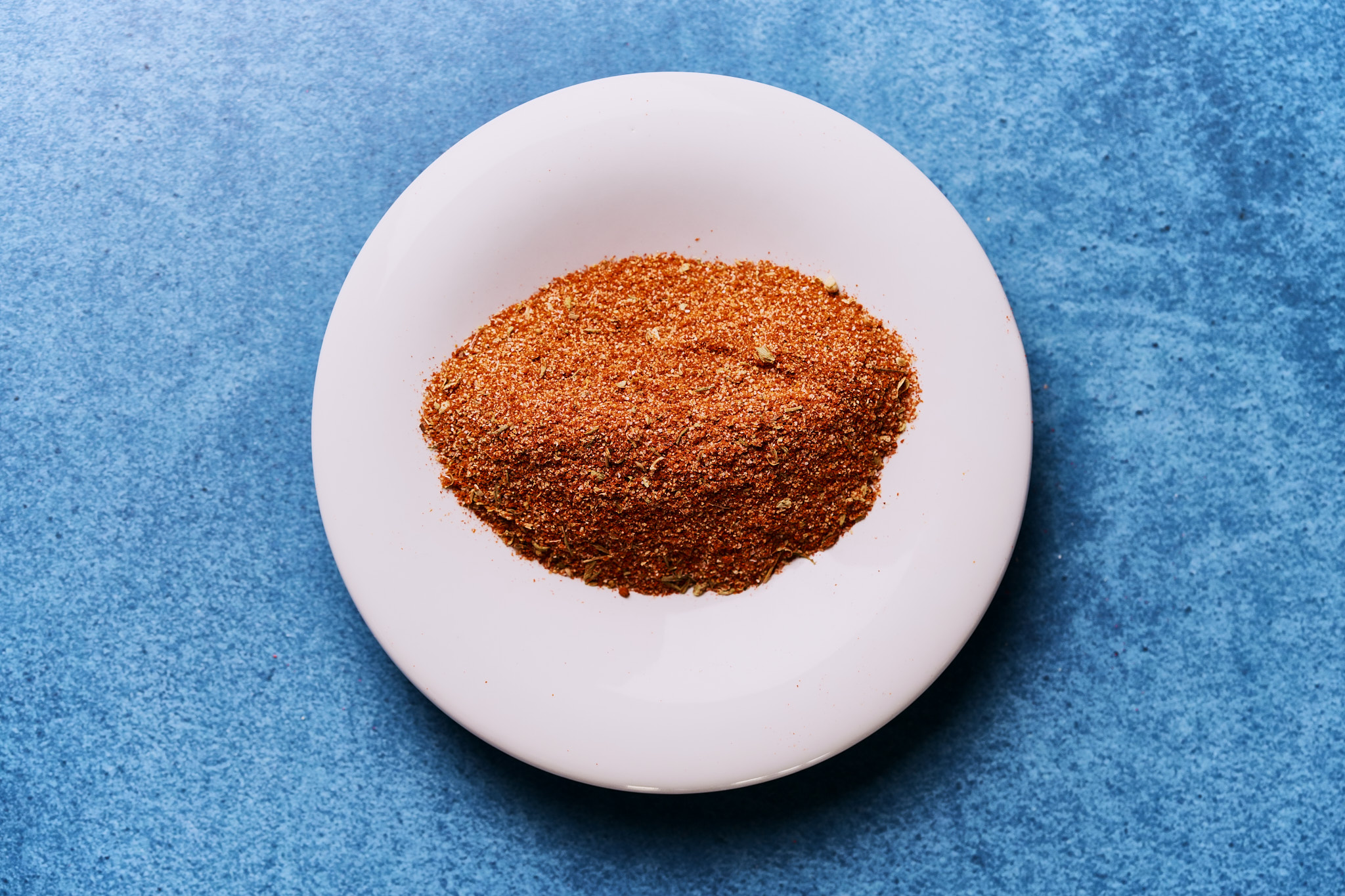
To make the perfect blackened fish every time, you need to make your own seasoning that doesn’t have any salt or pepper in it. Those need added separately to ensure proper seasoning and best flavor.
For the blackened seasoning
7 g | 1 tbsp paprika
5 g | ½ tbsp garlic granules
3 g | 1 tsp onion granules
0.4 g | ½ tsp dried thyme
0.2 g | ½ tsp dried oregano
0.5 g | ¼ tsp cayenne pepper (adjust to taste)
In a small bowl, combine the ingredients and whisk. You will have left over seasoning.
For more detail, see our full blackened seasoning blend recipe.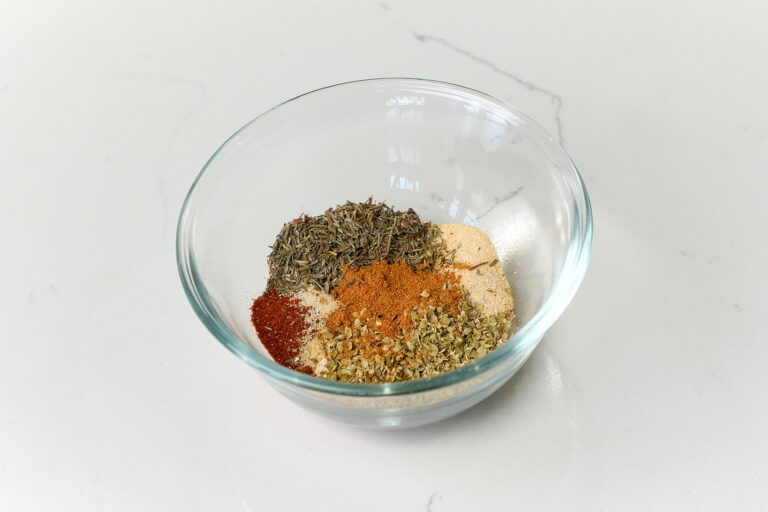
Heat the Skillet
Heat a 12-in cast iron or heavy bottomed stainless steel skillet over medium-high heat.
Do not add the oil just yet to avoid it burning in the pan if it gets too hot while you season the fish.Prep the Fish
Pat the mahi mahi fillets dry with paper towels. Just before adding to the pan, lightly coat the fish with 1/2 tsp of the oil (1/4 tsp each). Season both sides evenly with salt and black pepper first. Then season with the blackening seasoning. Lightly rub the seasoning into the fish for better adherence.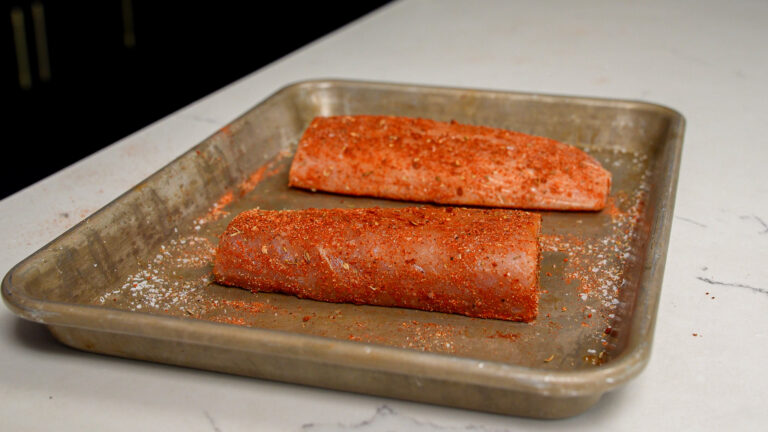
Add the Fish
Once the pan has preheated, add 2 tbsp avocado oil and let it heat until shimmering but not smoking.
Carefully place the fillets in the skillet. Cook for 3–4 minutes on the first side, pressing gently with a spatula to ensure even contact with the pan.
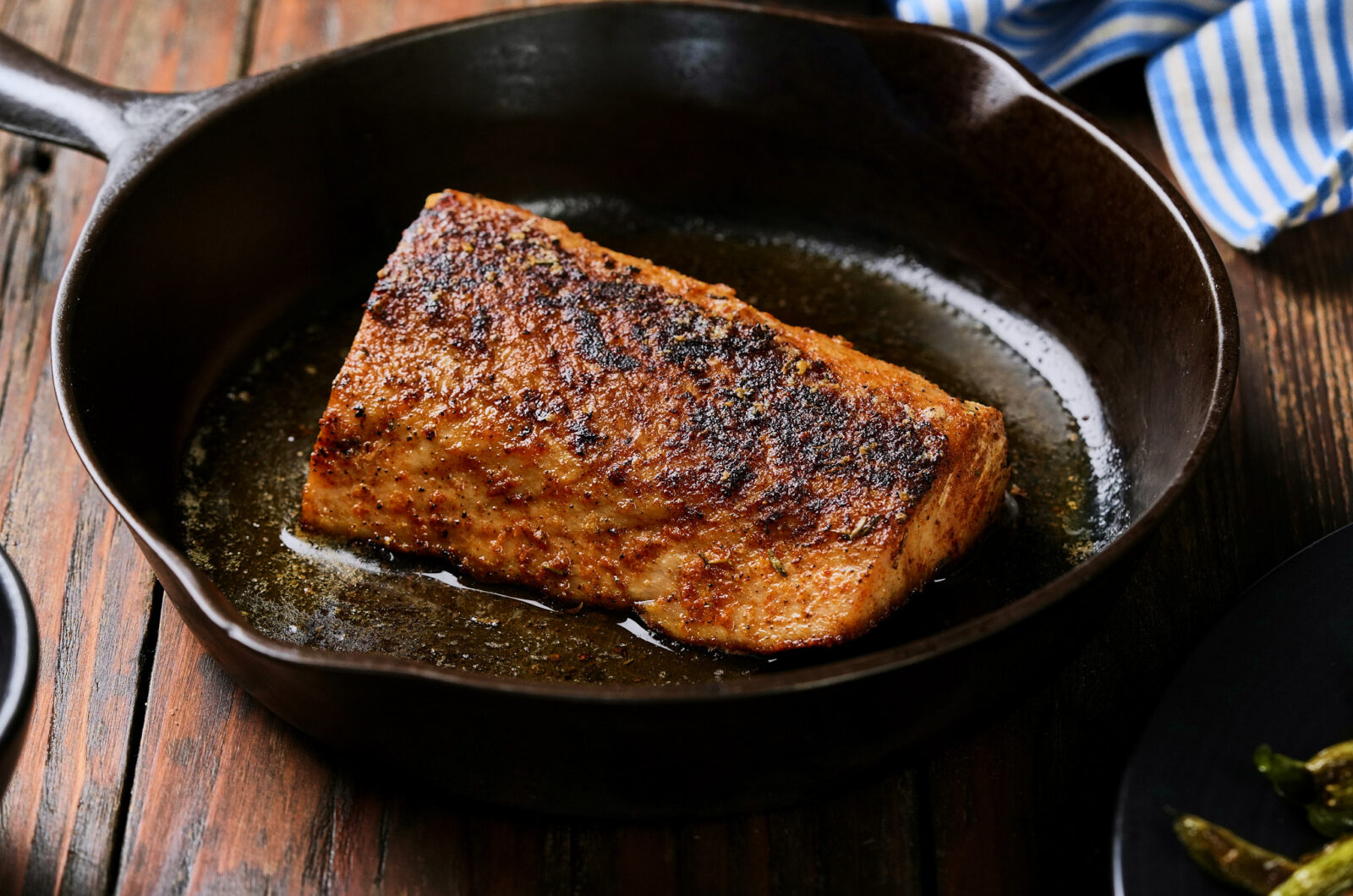
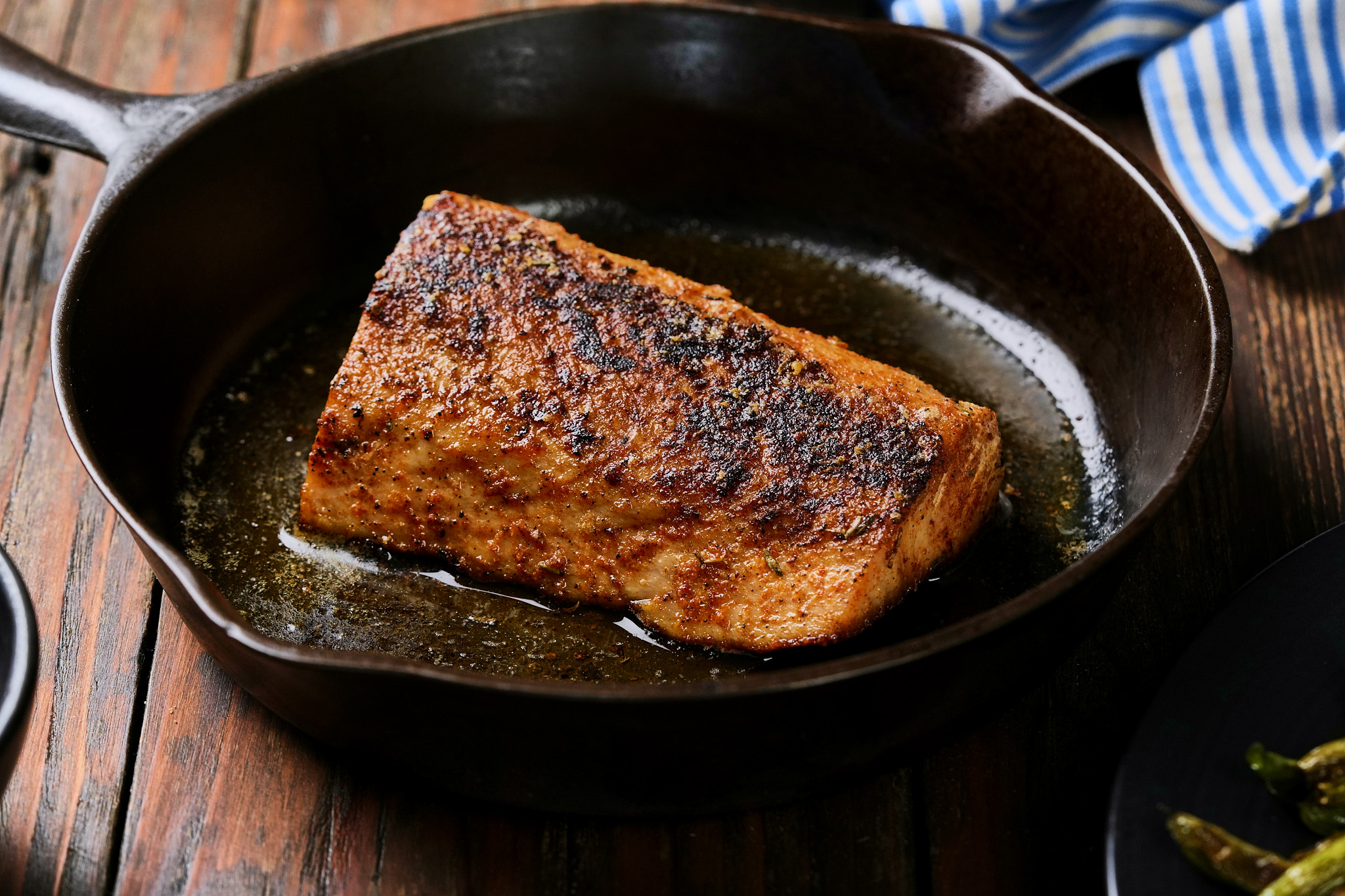
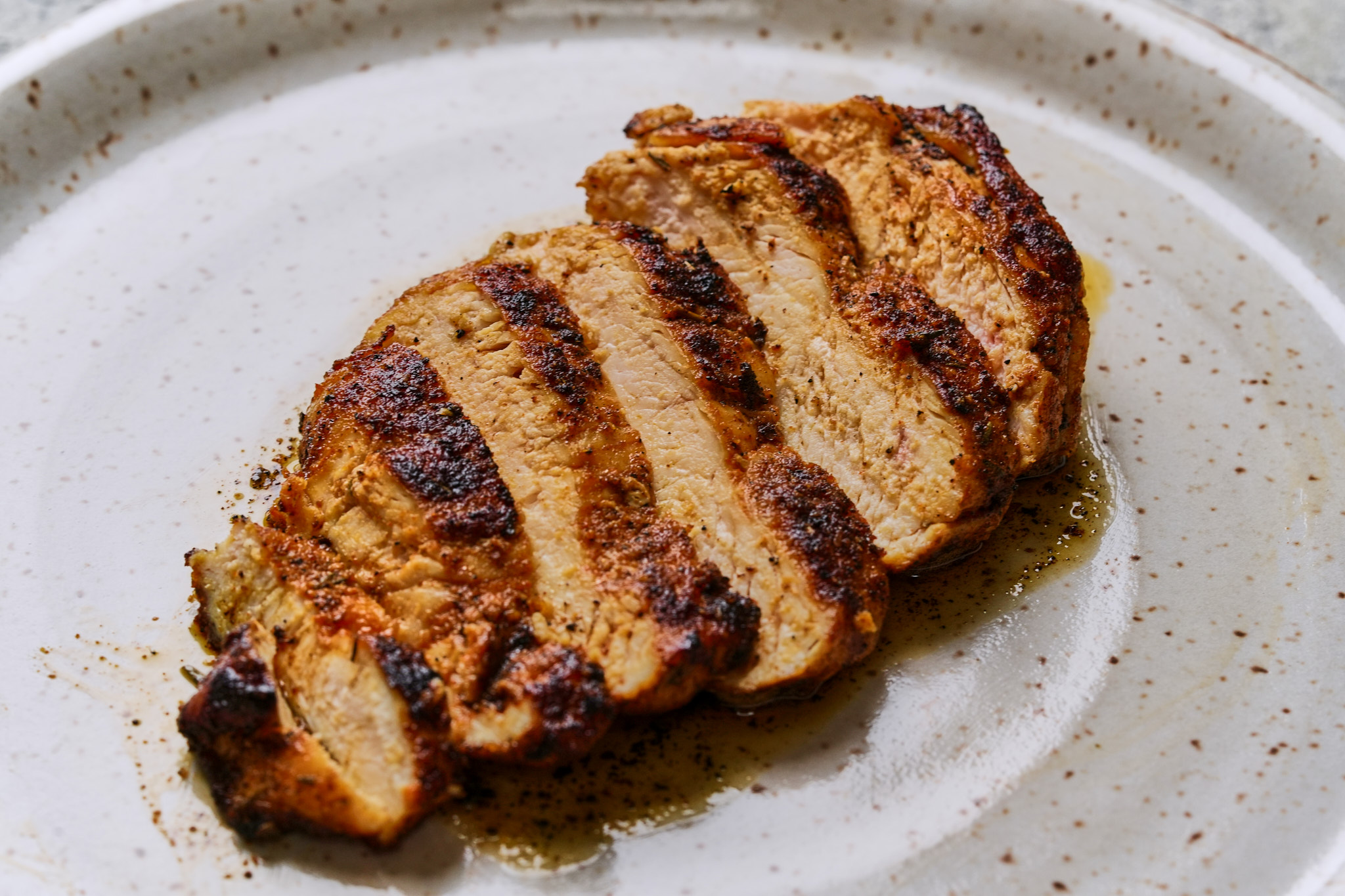
You are looking for a nice crust that is deeply colored but not burned.
For fish less than 3/4 in thick, your timing may be more like 2-3 minutes. For really thin fillets 1/4 in or so, it is best to crank the temp to high to get a sear before the fish is done cooking.
TIP: If you have a laser thermometer, you are looking around 450-500F on the surface of the pan. It is important to start with a high heat, add plenty of oil, and press down on the fish to achieve the blackened crust we are after.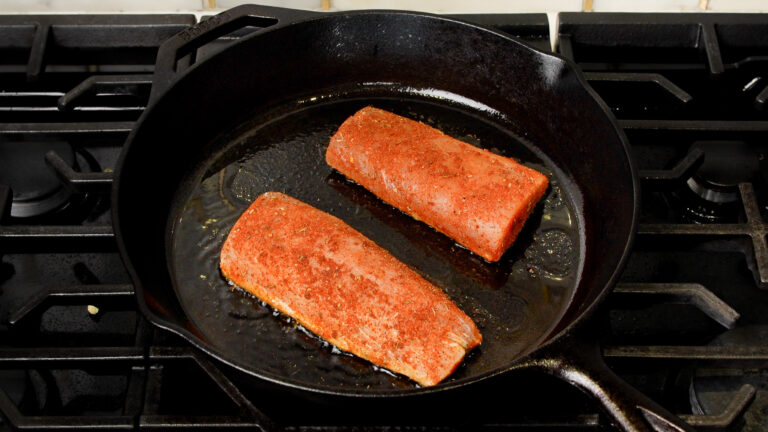
Flip the Fish
Using a spatula and a small wooden spoon, carefully flip the fish over and press gently again on the other side for about 10 seconds. Cook for another 3–4 minutes, less time for thinner fillets.
Once you have developed a crust that is deeply colored but not burned, move to the next step.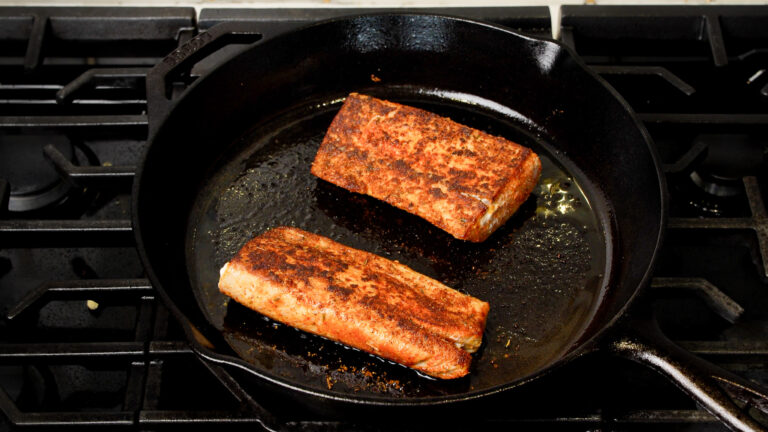
Cook to 120F
Using a thermometer, check the thinnest of your fillets and stick the probe in the middle of the thickest part of the fillet. If it is between 118-122F, take it off the heat and transfer to a plate. Then check the temp of the remaining fillets.
If it is under 118 F, reduce the temp to low and flip the fish back to the other side. This will allow the fish to continue cooking without burning it. Flip every few minutes if needed until the temperature reads 120F. Then take it off the heat and let it rest.
TIP: This is the crucial part. Fish overcooks in seconds, and the temp is the difference between flaky, juicy tender fish, and a dry, stringy mess. The pull temp is 120 F. The temp rises to about 125-130 after the resting step.Finish With Butter
On low heat add 3 tbsp unsalted butter to the skillet. Once it has melted and is bubbling, spoon the melted butter over the fillets until fully coated. This enhances flavor and keeps the fish moist.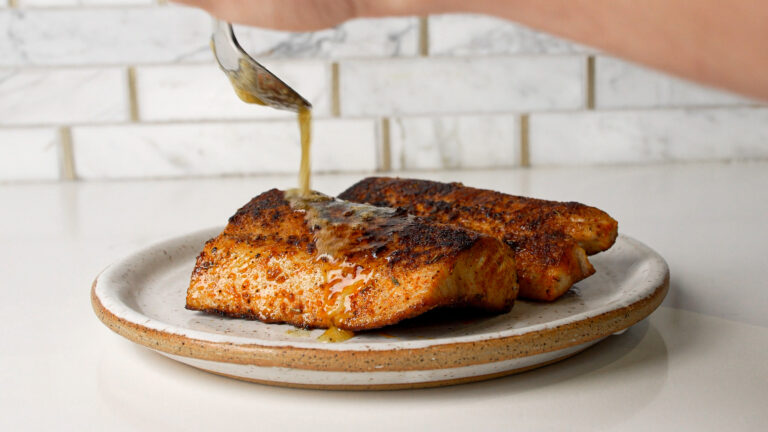
Rest and Serve
Ensure the fish has rested at least 2 minutes from when it was taken out of the pan to reach it’s final temperature of 125-130F. The temp rises due to carry over cooking, which is why we pull it at 120F.
Serve immediately with your choice of sides, like steamed vegetables or a fresh salad.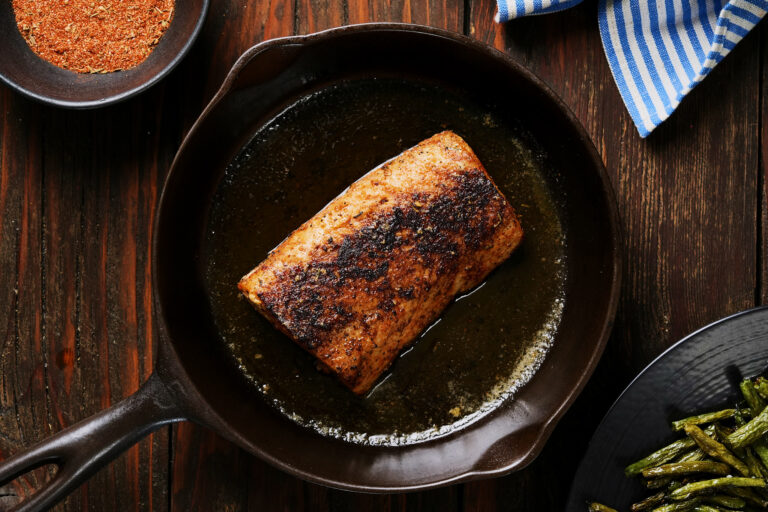
You May Like These Recipes Too
Additional Details About This Recipe
Can I use another fish?
Yes, you can substitute mahi mahi with other firm white fish like snapper, halibut, or grouper.
Can I make this ahead?
Blackened fish is best served fresh, but you can prep the blackened seasoning in advance to save time.
What’s the best way to reheat it?
Fish doesn’t particularly reheat well, but if you need to, do it in an oven. Heat oven to 350 F and place the fish on a small sheet pan, add a tsp of water on top. Cook on the middle rack for 7-10 minutes until the middle of the thickest part of the fish is 120 F. This restores moisture and gently reheats it to the correct temp.
Is this gluten-free?
Yes, this recipe is naturally gluten-free.
Can I make it more/less spicy?
Reduce or omit cayenne in the blackening seasoning for a milder flavor. Double it for a good kick.
Nutritional Facts (per fillet)
(Values are estimates based on USDA data for mahi mahi and butter.)
- Calories: 320 kcal
- Protein: 35 g
- Fat: 20 g
- Saturated Fat: 8 g
- Carbohydrates: 1 g
- Fiber: 0 g
- Sodium: 480 mg