

Disclaimer: Some links are Amazon affiliate links. Purchases made through them help support the recipe testing, photos, and content I share — thank you!
Summary
Tender, springy fresh fettuccine pasta — so good, your Nona would be proud
Fresh fettuccine has a texture dried pasta just can’t match—especially when made with ultra-fine “00” flour and whole eggs. This version sticks to tradition, by adding no salt or oils to the dough, and kneading it entirely by hand for superb texture and hydration. We took the time to add helpful tips so you can avoid common pitfalls along the journey. The result is a smooth, golden dough that rolls like a dream and cooks in minutes.

4
servings30
minutes1
minute200
kcal30
minutes1
hourFresh fettuccine has a texture dried pasta just can’t match—especially when made with ultra-fine “00” flour and whole eggs. This version sticks to tradition, by adding no salt or oils to the dough, and kneading it entirely by hand for superb texture
Ingredients
300 g 2 cups “00” pasta flour
155 g 3 whole eggs
Equipment
Directions
Before We Start
Flour matters: The “00” pasta flour is ideal. It is soft, elastic, and makes great pasta. If that is not available, you can still use all-purpose flour.
No salt: Italians do not salt the dough, they salt the water.
Cutting options: A pasta machine fettuccine cutter makes fast work, but you can also roll the dough and slice it by hand.Make a flour well
Pour the flour onto a clean surface or into a large bowl. Create a deep well in the center and crack the eggs into it.
TIP: Don’t use a stand mixer to mix pasta dough. There can end up being an extra 20–40g of flour left over and the mixer tends to make the dough too dry if that is the case.
Mix by hand
Use a fork to gently whisk the eggs, gradually pulling in flour from the edges. Once it becomes thick enough to where the eggs won’t run off the table, switch to your hands to bring it together.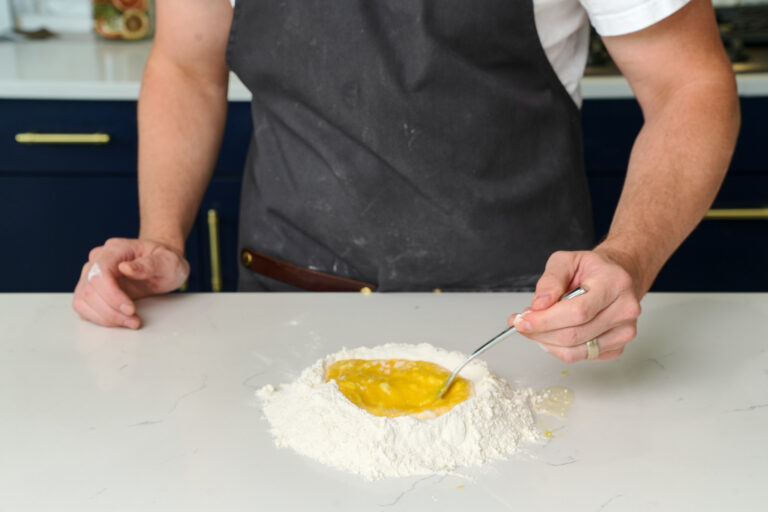
Knead
Knead the dough firmly for 8–10 minutes until smooth, elastic, and no longer sticky. You are folding the dough in on itself, and then pressing it together with your palm. This process creates little air pockets that make the dough lighter in texture. To know if you are done, it should be a smooth ball that is somewhat strong.
There may be flour left over—don’t force incorporating all of the flour. Let the dough decide how much it needs as you knead.
At the right moisture level, the dough will not feel tacky, but if you pinch the dough together, it should allow you to seal it. If tacky, it is too wet and needs flour. If it can’t seal, it is too dry and needs a little water to fix the dryness.
Once ready, wrap in plastic wrap or cover with a damp towel and rest at room temperature for 30 minutes.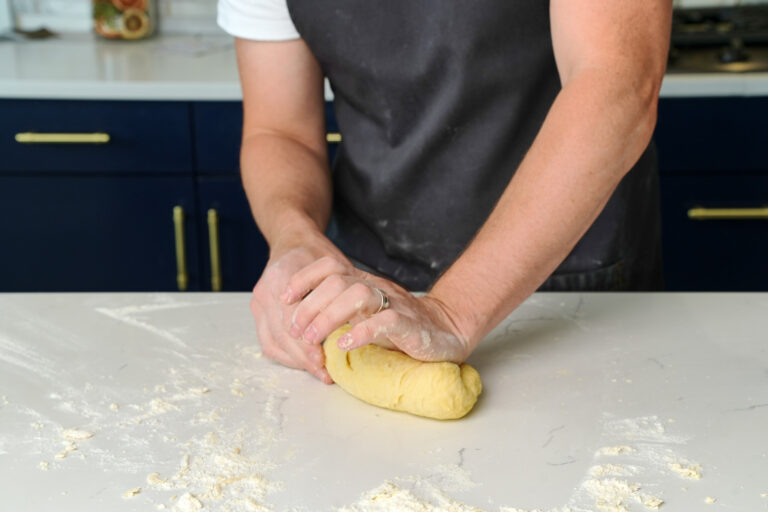
Roll into sheets
Divide dough into two pieces. Flatten slightly, then roll each piece through a pasta roller, starting at the widest setting and gradually working down to setting 6. At this setting you should be able to see your hand through the dough. If they start to get too long for you to easily work with, you can either fold it and unravel before it goes through the machine or cut it in half.
NOTE: If you notice that there are some uneven spots when rolling, then dust the pasta sheet with a touch of flour on both sides and continue rolling. This generally happens as the sheets get thinner and the hydration from the dough causes it to stick slightly to the roller, causing an uneven pass.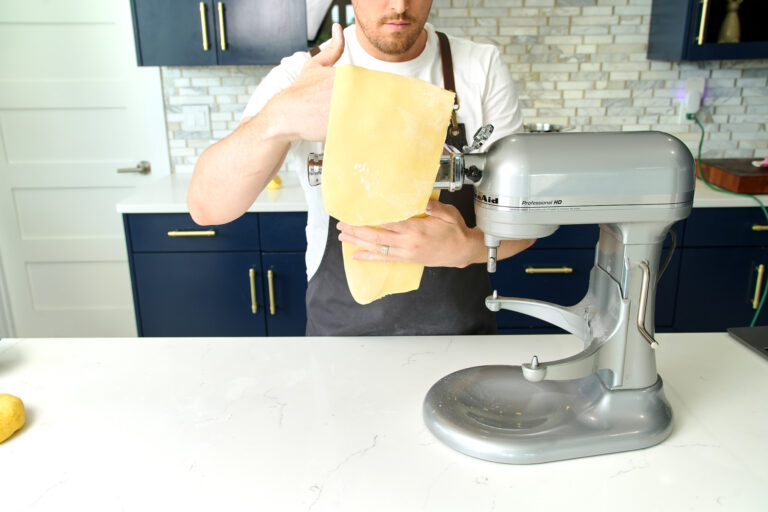
Cut into fettuccine
Dust sheets lightly with flour. Cut them into 10in lengths using a knife or bench scraper. Run each sheet through the fettuccine cutter. If cutting by hand, fold and slice by hand into ~¼-inch ribbons. Then toss them gently with a bit of flour to prevent sticking.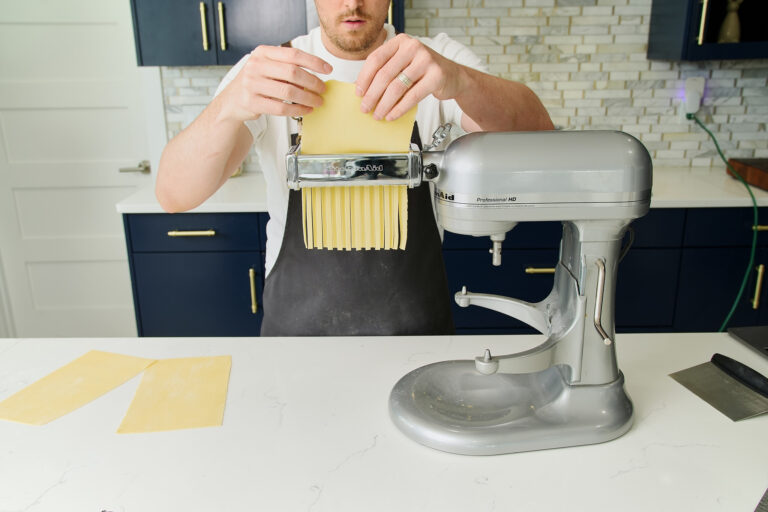
Cook or store
To cook, fill a pasta pot 2/3 full with water and add a generous handful of salt (it should taste like the sea). Bring the water to a boil and cook the pasta for 2–3 minutes, or until they start to float. You are looking for an al dente texture. You should take one out and taste before removing.
Use immediately with your sauce of choice.
If storing, then you will want to lay the uncooked pasta on a pasta rack to dry. You can let it dry on your counter as well, just be sure to separate them and arrange them nicely, so they don’t dry into a contorted mess.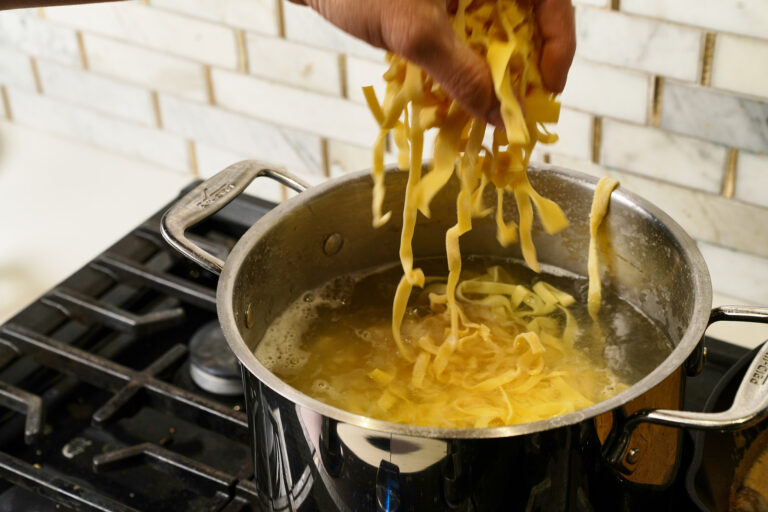

You May Like These Recipes Too
Additional Details About This Recipe
Can I double this recipe?
Yes! Simply maintain the flour to egg ratio and cut into more sheets so it is manageable.
How do I freeze fresh pasta?
Dust with flour, form into loose nests, and freeze on a tray. Transfer to a bag once solid. Boil from frozen, no thawing needed.
Can I use AP flour instead of 00?
You can, but it will be slightly coarser and less supple. The fineness and gluten content of “00” is best for a smooth and soft elastic dough. We really prefer the “OO” flour made specifically for pasta. It just brings a better texture. If not use the general purpose “00” flour, not the pizza one.
Why no salt or oil?
They don’t salt their dough in Italy, they salt the pasta water. If you add salt, it ends up being too salty by the end of it. Listen to the wonderful Nona’s around the world and keep it simple. Just flour, eggs, and elbow grease is all you need.
How do I hand-cut fettuccine?
Roll your sheet into a loose cylinder and slice with a sharp knife into ~¼-inch wide ribbons. Unroll and dust with flour.
Nutritional Facts
(Per Serving, Approximate)
Fiber: 1 g
Calories: 200
Protein: 8 g
Fat: 4 g
Carbohydrates: 30 g